


Latest news

Three major U.S. federal agencies jointly established an anti-fraud roundtable, but merchants face immediate fraud threats and need to implement defense strategies at the point of sale, including optimizing billing descriptors, strengthening customer communication, monitoring transactions in real time, and proactively managing chargebacks to protect revenue.

Retailer, restaurant and other merchant groups this week urged the National Credit Union Administration (NCUA) to withdraw its new rule that preempts an Illinois law limiting bank card interchange fees. Merchants called the rule "illegal" and "anti-competitive" and submitted formal comments.

Block agreed on Wednesday to pay $45 million to settle with 46 states over misleading consumers about Cash App's security claims and failing to provide fraud protection. The settlement requires Block to improve customer support processes and ensure at least 13.5 hours of live phone support and 18 hours of online chat are available daily.

Apple and Android digital wallets are integrating biometric technology into identity verification and payment processes, and faces are becoming a new payment credential. This article reviews industry trends, regulatory developments, and consumer trust challenges.
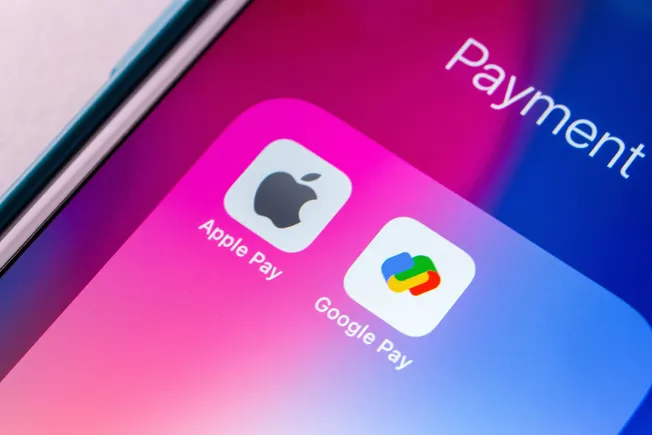
American Express announced on Tuesday that cardholders can now use Membership Rewards points to offset purchases at checkout via Apple Pay, applicable to online and in-app transactions within digital wallets. This move is the latest development in the partnership between Amex and Apple since 2014, and part of its efforts to expand points redemption scenarios.

Amazon has agreed to pay $2.25 million to settle Federal Trade Commission (FTC) allegations that it failed to provide records related to fraudulent credit or debit card transactions to identity theft victims.

As 2026 enters its second half, the payment industry still offers numerous conferences and exhibitions for professionals to attend. This article outlines the major events from July to December, covering MWAA, MoneyLive, MAG, Money20/20, AFP, and FTT, with a focus on hot topics such as AI, fraud prevention, and ISO 20022.

Payment security companies ACI Worldwide and Bluefin Payment Systems warn that the FIFA World Cup currently taking place in North America will drive a large volume of online ticketing and related spending, and fraudsters are poised to strike. AI technology has caused the global amount of online fraud to increase by 9.2% year-over-year in 2025. Based on analysis of 24.5 million historical transaction records, ACI found that event-related fraud begins to rise 8-12 weeks before the event, with individual fraud amounts typically ranging from $200 to $400. Fraudsters steal consumer credentials through fake websites and then make subsequent purchases on legitimate sites. Bluefin notes that AI makes fraudulent websites and phishing emails harder to distinguish. Both companies recommend that merchants strengthen monitoring, enhance verification processes, and adopt technologies such as tokenization and point-to-point encryption to protect payment data.

The Illinois legislature passed a bill to license and regulate buy now, pay later (BNPL) lenders, which has been sent to Governor JB Pritzker for signing. Unlike similar legislation passed in New York in May 2025, trade organizations such as the American Fintech Council (AFC) and the Financial Technology Association (FTA) have taken a 'neutral' stance on the final version of the Illinois bill. The bill includes provisions such as a 120-day loan definition, dispute resolution, refund limits, and restrictions on the number of ACH debits. Consumer advocates argue that the bill is more lenient than New York law, citing a '120-day loophole' and regulatory gaps. Meanwhile, the BNPL industry continues to grow with increased state-level regulation, while federal Consumer Financial Protection Bureau (CFPB) rules have been rescinded.
The U.S. Citizenship and Immigration Services (USCIS) mandated electronic payment of filing fees last fall, and immigration law firms found that with the elimination of paper checks, the associated case tracking and audit functions also disappeared. Finance teams had to manually match numerous similar ACH or credit card debits, reconstructing audit trails that were previously taken for granted. The author, Joon Park, argues that this case reflects broader infrastructure issues behind the federal shift to electronic payments (such as Executive Order 14247): digitalization should not only address the flow of funds but also preserve the information, controls, and accountability behind payments.