


Latest news

On July 24, 2026, PhotonPay released the white paper "Africa's Next-Generation Payment Infrastructure," pointing out that Africa's mobile payment innovation coexists with cross-border fragmentation, and proposing a multi-rail architecture that uses stablecoins as a supplementary settlement layer to connect local payment networks with global liquidity, thereby reducing transaction costs and shortening settlement times.

Global supply chains are facing challenges from multi-asset settlement, complex compliance, and foreign exchange volatility. PhotonPay proposes the concept of a financial operating system that integrates fiat and stablecoins, real-time risk control, and localized operations, helping enterprises shift from 'whether funds have arrived' to 'how fast business can run.'


Southern Financial Exchange (SFE) announced a partnership with Optim ACH Solutions (OAS) to provide self-audit and risk assessment solutions for ACH participants. The tools assist ODFIs in ensuring their Originators and Third-Party Senders comply with Nacha rules, including annual audit requirements. Available via SFE.org, the suite covers payroll providers, property management, WEB debit security, and more.

During a Wednesday online seminar, anti-fraud professionals noted that financial institutions need federal rule changes and cross-industry collaboration to more comprehensively combat online fraud. Experts called on banks, telecommunications, and social media companies to share signals and account data, and to push for legislative updates to modern safe harbor provisions.

M&A activity in the payment industry accelerates in the second half of the year, with deals such as Stripe's potential acquisition of PayPal and Fiserv's possible sale of its debit network drawing attention.
PhotonPay Founder and CEO Lewison, in an article for Payments Dive, argues that the next stage for stablecoins in B2B payments is not an acceptance issue, but an orchestration issue. Citing data from the Kansas City Fed and PYMNTS Intelligence, he points out that actual stablecoin usage remains low, with the core obstacle being the lack of unified management among corporate finance teams over fund location, flow, decision-making, and permissions. Lewison proposes a "four maps" framework and introduces PhotonPay's multi-asset wallet, automated reconciliation, and compliance capabilities, emphasizing that companies should focus on whether suppliers can achieve real-time balance visibility, automated conversion execution, cross-entity transfers, and automated reconciliation.

IXOPAY, a payment infrastructure provider, has named Ajoy Krishnamoorthy as its new CEO. Krishnamoorthy, a veteran enterprise software leader, will focus on bringing IXOPAY's modular product suite into the agentic age, helping merchants scale global payment operations. The company reported $171 billion in payment volume in 2025, with over 2.1 billion tokens secured and 1.6 million merchants supported.
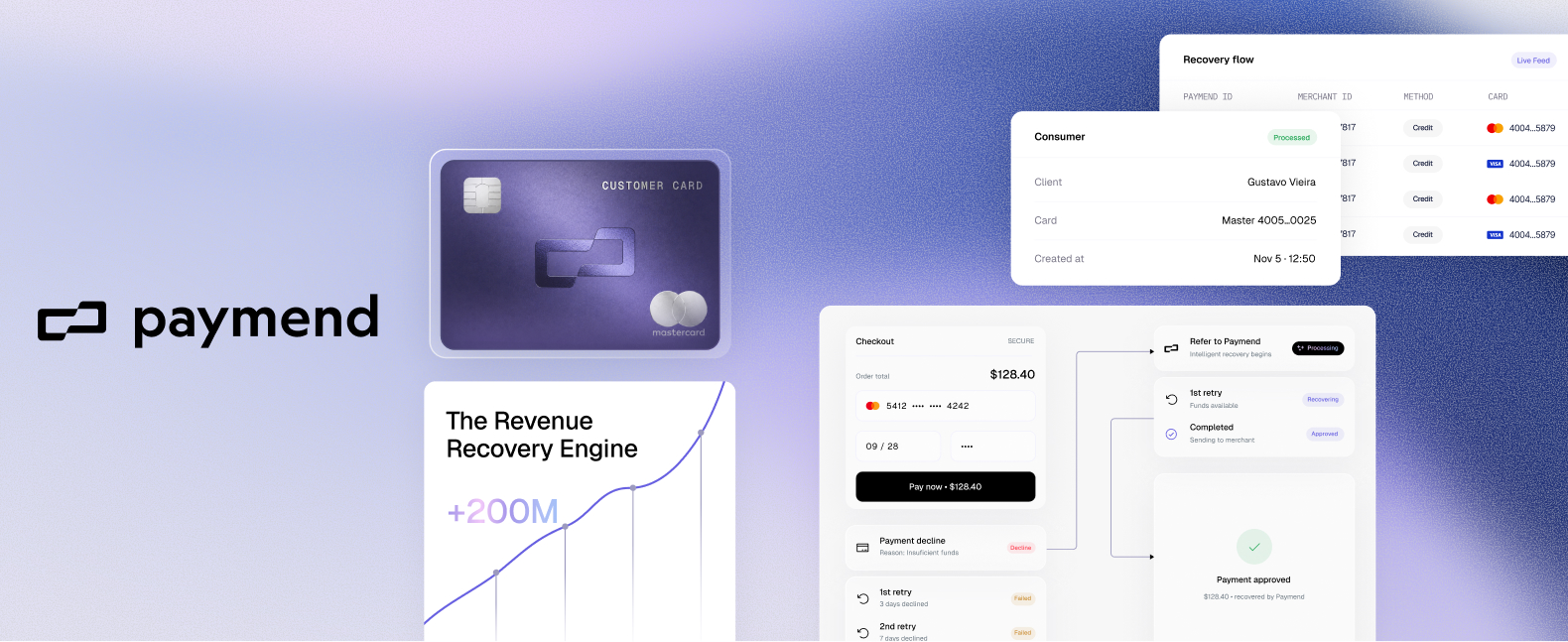
On September 1, 2026, Paymend announced the appointment of Javier Vallaure de la Paz as Chief Operating Officer. He will oversee merchant delivery, partner integration, and the operational systems supporting the company's entry into new markets and product lines. Having recovered over $200 million in revenue for more than 100 merchants to date, this appointment marks a new phase of scaled growth for Paymend.

The Jackson Hole Economic Policy Symposium, which concluded last Friday, focused on payment innovation, with tokenized deposits taking center stage. In his speech, Pablo Hernandez de Cos, General Manager of the Bank for International Settlements, noted that tokenized deposits operate within a two-tier banking system, maintaining a close link between deposits and credit and reducing disintermediation risks, while stablecoins exhibit notable shortcomings in cross-chain interoperability. Meanwhile, the U.S. real-time payment system is accelerating its cross-border expansion, and the tokenized deposit network is also advancing.